Your Home Gym Is Comfortable. That's Exactly the Problem.
The Gym You Know Like the Back of Your Hand
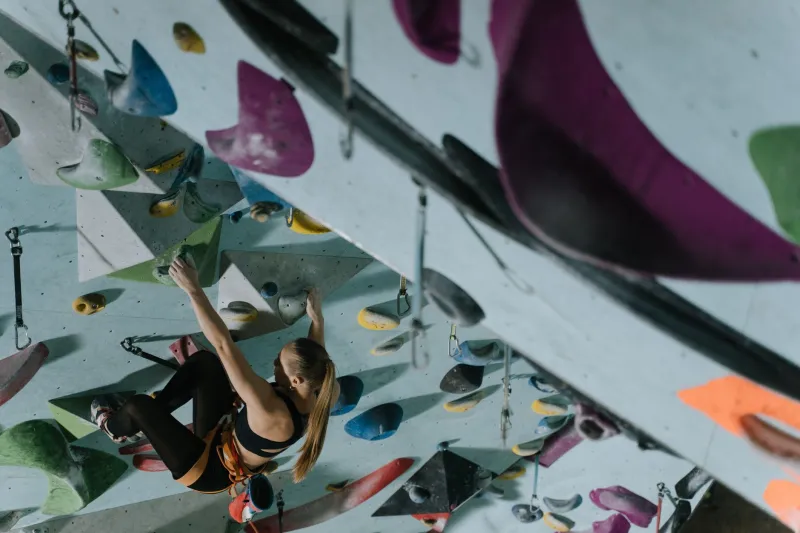
There's a specific kind of confidence that comes from knowing a climbing gym inside and out. You know which holds are slippery when it's humid. You know the wall angles that suit your style. You know the setter's tendencies, which beta works on the overhang section, and exactly how much chalk to expect on the popular V4 near the entrance.
That familiarity feels productive. It feels like mastery.
It isn't.
What you're actually experiencing is something coaches and sports scientists call environmental habituation — and for climbers, it's one of the sneakiest performance ceilings out there. The longer you climb in a single environment, the more your nervous system optimizes specifically for that environment. You get better at that gym. You don't necessarily get better at climbing.
How Your Brain Stops Working for You
Here's the thing about neural adaptation: your body is extraordinarily good at becoming efficient. When you repeat the same movement patterns on the same wall angles with the same hold types week after week, your brain essentially builds a shortcut. Movements that once required conscious effort become automatic. That sounds great — and in the short term, it is.
But automatic isn't the same as strong. It's not the same as capable. And it's definitely not the same as ready for something new.
When you climb unfamiliar terrain — a different gym, an outdoor crag, a wall with a completely different set logic — your nervous system has to actually work again. It has to problem-solve in real time. It has to recruit muscles in sequences it hasn't memorized. That discomfort? That's adaptation happening. That's the thing you've been accidentally skipping.
Researchers who study motor learning call this "contextual interference" — the idea that varying the conditions of practice actually accelerates long-term skill acquisition, even if it feels messier in the moment. Climbers who regularly expose themselves to novel movement demands develop more transferable skill sets than those who drill the same patterns repeatedly.
In plain English: struggling at a new gym is making you better. Crushing the same routes at your home gym probably isn't.
The Sandbag Effect in Practice
Let's talk about what this actually looks like on the wall.
You've been climbing V5s at your gym for months. You feel solid. You're consistent. Then you visit a friend's gym two hours away — or better yet, you head out to a real crag — and suddenly you're fighting to hang on to V3s. The holds feel wrong. The movement doesn't click. You're pumping out on routes that should be well within your ability.
This isn't a bad day. This is the sandbag effect.
Your grade isn't a grade. It's a grade at your gym, on your gym's holds, set by your gym's setters, on walls you've climbed so many times your body practically does it on autopilot. The moment you remove any one of those variables, the floor drops out.
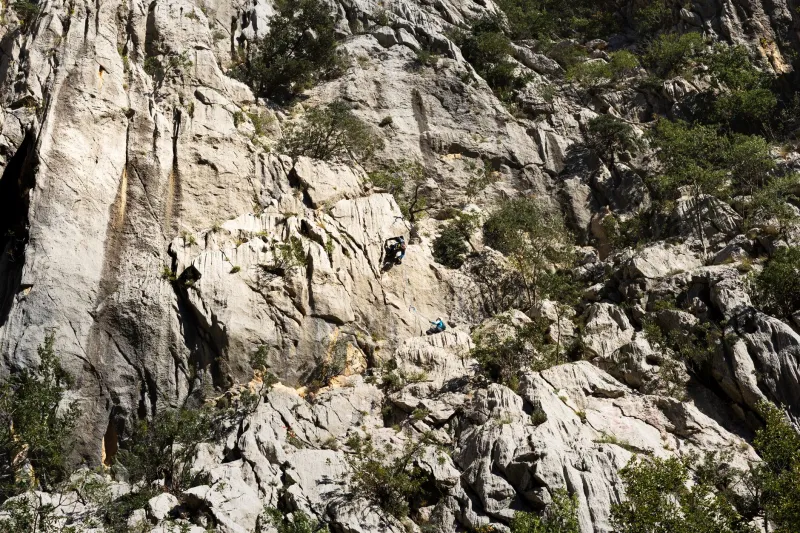
This hits hardest when climbers finally make the jump to outdoor rock. The transition from gym movement to real stone is jarring for everyone, but it's especially brutal for climbers who've spent years building skills in a single indoor environment. There's no muscle memory for sloping granite, for pocketed limestone, for the subtle compression moves on a sandstone arete. You have to earn all of that from scratch.
Strategic Gym-Hopping Isn't Flaky — It's Smart Training
The fix here isn't complicated, but it does require some intentionality.
If you have access to multiple gyms — and most climbers in mid-to-large US cities do — start treating them as training tools rather than just venues. Don't just visit a new gym when you're traveling or when a friend drags you along. Build it into your rotation on purpose.
Even once or twice a month at a different facility makes a measurable difference. Different setting styles force you to read movement instead of recall it. Different wall geometries expose weaknesses in your footwork, your hip positioning, your ability to generate tension through unfamiliar body positions. You'll get worked. You'll also get better.
If your options are limited — maybe you're in a smaller market with only one gym nearby — you can manufacture some of that novelty without leaving. Climb with your non-dominant hand leading more often. Try routes blindfolded for the first few moves to break your reliance on visual memory. Attempt routes in reverse beta. Make the familiar strange again.
And seriously, get outside. Even once a month on real rock does more for your overall climbing development than any amount of gym volume. Outdoor climbing demands full-body problem solving in a way that no indoor wall can fully replicate.
What You're Actually Training When You Stay Comfortable
There's a harder truth underneath all of this worth sitting with.
When you spend years in the same gym, you're not just limiting your physical adaptation — you're also training your mind to equate comfort with competence. You start to believe that feeling good on the wall means you're climbing well. But feeling good just means you're in familiar territory. Those are not the same thing.
Real climbing competence is measured by how you perform when nothing feels right. On an unfamiliar crag in bad conditions. On a route that doesn't suit your style. At a gym where the setters clearly hate your particular brand of pulling. That's where the gaps in your game get exposed, and exposure is the only thing that closes them.
The climbers who progress the fastest aren't always the ones training the hardest. They're often the ones training in the most varied environments — chasing discomfort, staying curious, refusing to let any single setting become their whole world.
Stop Optimizing for Your Home Gym
Your gym is a tool. A great one, probably. But it's a tool with limits, and those limits become your limits if you never look beyond them.
The goal isn't to abandon your home gym. It's to stop letting it be the only data point you use to measure your climbing. Get uncomfortable somewhere new. Struggle on unfamiliar terrain. Let your nervous system figure things out from scratch.
That friction you feel when nothing comes automatically? That's not weakness. That's your climbing actually growing.
Climb higher. Go further. Just maybe not always on the same walls.