Make Your Gear Last: A No-Nonsense Guide to Climbing Equipment Care
Let's talk about money for a second. A complete rack of climbing gear — rope, harness, helmet, draws, cams, stoppers, belay device — can easily run $1,500 to $3,000 or more when you add it all up. For most of us, that's a real investment, not an impulse buy. And yet, plenty of climbers treat their gear like it's disposable: tossing ropes in the back of a hot car, leaving harnesses in damp garages, or running carabiners through gritty sand without a second thought.
The result? Equipment that wears out faster than it should, more frequent replacement costs, and — more importantly — gear that might not be performing the way you think it is when you actually need it.
Here's the thing: with a little consistent attention, most climbing equipment will last significantly longer than it does for the average climber. This guide breaks it down piece by piece.
Ropes: Your Most Important (and Most Abused) Piece of Gear
A good dry-treated single rope costs anywhere from $150 to $300. It also takes more abuse than almost anything else in your kit — dirt, UV exposure, sharp edges, fall forces, and friction from belay devices all take their toll.
Washing: Ropes should be washed regularly, especially if you climb outdoors frequently. Hand washing in a bathtub with lukewarm water and a small amount of mild soap (or a purpose-made rope cleaner like Beal Rope Cleaner) is ideal. Flake the rope loosely, let it soak for 20–30 minutes, rinse thoroughly, and hang it in loose coils to dry away from direct sunlight. Never put a rope in a dryer.
Storage: UV radiation degrades nylon over time, so store ropes in a bag or shaded location. Heat is also an enemy — don't leave your rope in a parked car in the summer. A cool, dry closet is ideal.
Retirement: This is where things get serious. Ropes should be retired based on usage frequency, not just age. A rope that's taken a significant leader fall should be inspected carefully for flat spots, stiff sections, or core damage (run it through your hands slowly and feel for inconsistencies). UIAA guidelines suggest retiring ropes after any severe fall, and most manufacturers recommend retirement within 5–10 years regardless of use. When in doubt, retire it.
Harnesses: Don't Let Comfort Fool You
Harnesses feel fine right up until they don't. The webbing and stitching can degrade without being visually obvious, which makes regular inspection critical.
After every session, look at the belay loop and tie-in points — these take the most stress. Look for fraying, discoloration, or any change in texture. Run your fingers along the webbing to feel for flat spots or areas that feel unusually stiff or soft.
For cleaning, use cold water and mild soap. Never use bleach or solvents. Rinse well and air dry flat or hanging — don't hang it from a single point while it's wet and heavy.
Most manufacturers recommend retiring harnesses after 10 years, but heavy use, falls, or any exposure to chemicals (including fuel, bleach, or battery acid) can shorten that timeline dramatically. If a harness has ever been involved in a serious fall or looks questionable, it's done.
Carabiners and Quickdraws: Tougher Than You Think, But Not Indestructible
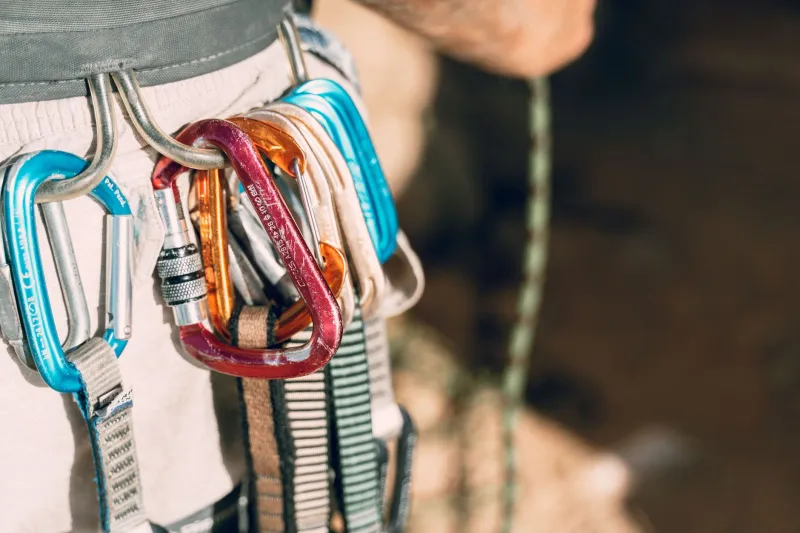
Aluminum carabiners are remarkably durable under normal climbing forces, but they're vulnerable to a few specific threats: grit, grooves, and impact damage.
Grit from sandy or dusty crags gets into gate mechanisms and causes wear over time. After climbing in abrasive environments, rinse your biners with clean water and let them dry before storing. A drop of Teflon-based lubricant on gate hinges once or twice a year keeps the action smooth.
Grooves are a bigger deal. If your carabiners have developed noticeable grooves from rope wear — particularly on the basket — they need to be retired. A grooved 'biner can cut a rope under load. Run your fingernail across the contact surface; if you can feel a distinct channel, it's time to replace it.
Never use a carabiner that has been dropped from height onto a hard surface. Aluminum can sustain invisible internal damage from impact, and there's no reliable way to inspect for it. Mark it with tape and retire it.
Crash Pads: The Forgotten Gear
Bouldering crash pads get dragged through dirt, left in wet conditions, and generally treated like furniture. They deserve a little more respect.
Brush off dirt after each session. If the cover gets soaked, open it up and let the foam dry completely before closing it — trapped moisture leads to mold, which degrades foam and fabric. Check the straps and buckles regularly for wear, and inspect the foam layers if your pad has a removable cover. Foam that has lost its resilience — you can tell by pressing down and seeing if it springs back — is no longer doing its job.
A Simple Maintenance Checklist
Building a habit is easier when you have a system. Here's a quick routine that takes less than 10 minutes after most sessions:
- Rope: Flake and visually inspect for damage. Wipe down with a damp cloth if dirty. Bag and store away from sunlight and heat.
- Harness: Check belay loop and tie-in points. Look for fraying. Hang to dry if wet.
- Carabiners: Rinse if used in gritty conditions. Check gates open and close smoothly. Look for grooves.
- Helmet: Wipe down the shell. Inspect the foam liner for cracks or compression. Check strap hardware.
- Crash pad: Brush off debris. Verify straps and buckles are intact. Air out if damp.
The Real Cost of Neglect
Let's run some numbers. A rope that lasts five years with proper care might last only two without it. At $200 per rope, that's an extra $200 you're spending every three years — just on ropes. Multiply that across harnesses, draws, and other equipment, and neglect is genuinely expensive.
Beyond the money, there's the performance angle. Clean, well-maintained gear handles better. Ropes that aren't clogged with dirt run smoother through your belay device. Gates that are properly lubricated clip faster. It's not just about longevity — it's about the quality of your climbing experience right now.
Taking care of your gear is one of those habits that pays dividends in every direction. Your wallet notices. Your climbing notices. And when you're 60 feet off the deck, you'll be glad the equipment holding you has been treated like it matters — because it does.