Who's Got Your Rope? How to Find a Climbing Partner You Actually Trust
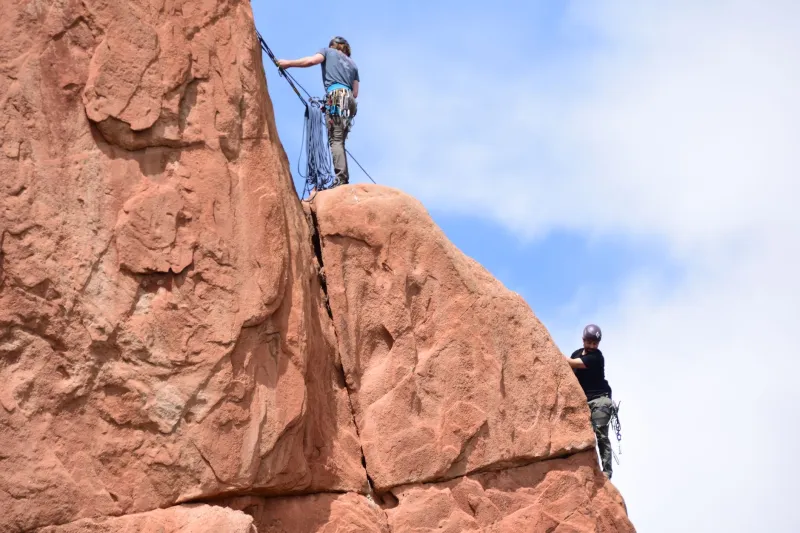
There's a saying in climbing circles that goes something like: you can pick your project, but you can't always pick your partner. Anyone who's spent enough time at the crag knows the truth buried in that joke. The person on the other end of your rope shapes your climbing in ways that go way beyond just catching your falls. They influence how hard you push, how much you learn, and honestly, how much you actually enjoy the sport.
Finding a solid climbing partner is one of those things nobody really prepares you for. You get taught how to belay, how to place gear, how to read a route. But the social dynamics of partnership? You're mostly left to figure that out on your own, often after an awkward day at the crag with someone whose idea of "chill climbing" means something completely different from yours.
Let's break this down in a way that's actually useful.
What You're Really Looking For
Compatibility in a climbing partnership isn't just about matching grades. Two 5.11 climbers can be completely wrong for each other. What actually matters is alignment across a few key dimensions:
Risk tolerance. This is probably the biggest one. Some people want to push into the runout zone and feel that edge. Others are perfectly happy clipping every bolt and calling it a day. Neither approach is wrong, but mismatched risk tolerance leads to real tension—one person feeling held back, the other feeling pressured into situations they're not comfortable with.
Climbing goals. Are you trying to send a specific project this season? Train consistently? Road trip to as many crags as possible? If your partner just wants to hang out and top-rope on weekends while you're deep in a performance training cycle, that friction is going to show up eventually.
Communication style. Climbing involves a lot of real-time feedback—beta, safety concerns, encouragement, constructive criticism. Some people want all of it. Others find constant commentary distracting. Figuring out how someone communicates under pressure tells you a lot about whether you'll work well together.
Logistics and commitment level. Are they reliable? Do they cancel last minute? Will they drive two hours to try a new area, or do they need everything to be close and convenient? None of these things are dealbreakers in isolation, but when they pile up, they matter.
Where to Actually Find Partners
If you're newer to an area or just starting out, finding partners can feel awkward. The good news: the climbing community in the US is genuinely welcoming in most places, and there are real avenues to connect.
Your local gym. This is still the most reliable starting point. Take a lead class, show up to open climbing nights, hang around long enough to become a familiar face. Gyms like Movement, Earth Treks, and countless independent facilities all have community boards and apps where people post partner requests.
Mountain Project and The Crag. Both platforms have partner-finding features tied to specific areas. If you're planning a trip to Red River Gorge or Shelf Road, posting in those regional forums can connect you with people heading there at the same time.
Local climbing clubs and meetups. Most major US cities have climbing clubs through the American Alpine Club or independent groups. These are especially good for finding partners interested in trad, alpine, or multi-pitch objectives—disciplines where the partner dynamic matters even more.
Guided trips and clinics. Sometimes the best way to find your people is to go do something you all signed up for together. A single-pitch clinic or a guided weekend at New River Gorge puts you in a low-stakes environment where you can actually see how people operate before committing to a partnership.
The First Few Climbs Are an Audition (For Both of You)
Think of your first couple of days with a new partner as a mutual tryout. You're not just evaluating their technical skills—you're watching how they communicate, how they handle stress, whether they're honest about their abilities, and whether they show up on time with their gear together.
Some green flags: they check in on how you're feeling about a route before assuming, they're upfront when something is outside their comfort zone, they're attentive and focused when belaying, and they don't make you feel bad for saying no to something.
Red flags are usually subtler. Watch out for partners who consistently understate their grade experience (this leads to unsafe situations), who apply social pressure when you want to bail, who are distracted or cavalier while belaying, or who make every decision unilaterally without checking in.
None of this means you need to interview someone before climbing with them. But pay attention to what you notice. Your instincts are usually pretty good.
Having the Uncomfortable Conversations
Even in solid partnerships, you'll eventually hit a point where someone needs to say something awkward. Maybe your partner has stopped progressing and you're feeling held back. Maybe your goals have shifted and you want to get into trad while they're happy staying on sport. Maybe there's a safety concern you've been avoiding.
The key is to lead with your own experience rather than framing it as a critique. "I've been feeling like I want to push into harder grades this season" lands very differently than "I feel like we're not progressing." One is honest and personal; the other puts the other person on the defensive.
It also helps to separate the partnership from the specific climbing context. You can still be friends, still grab coffee, still gym climb together—even if you're not the right match for outdoor objectives anymore. Climbing partnerships don't have to be all-or-nothing.
Knowing When It's Time to Move On
Sometimes a partnership just runs its course, and that's okay. The evolution of your climbing is supposed to take you to new places, new challenges, new people. If you've outgrown a partnership—or if the dynamic has become more draining than energizing—it's okay to acknowledge that.
Moving on doesn't require a dramatic conversation in most cases. It usually just means gradually expanding your partner network, saying yes to new people, and letting that particular partnership naturally find its level. You might still climb together occasionally, just less often.
The climbing community is small enough that burning bridges is genuinely costly—socially and logistically. Keep it respectful, keep it honest, and keep it focused on what's best for both of you.
Build a Network, Not Just a Partnership
The most seasoned climbers rarely rely on a single partner. They build a loose network of people with different strengths—one person who's great for long trad days, another who's a projecting machine, someone else who's always down for a casual sport day. This flexibility protects you from the logistical fragility of depending on one person's schedule, and it exposes you to a wider range of styles and approaches.
So don't just look for a partner. Build your crew. The climbing will get better, the community will feel more real, and you'll have a lot more fun doing it.
The rope connects you. The relationship is what makes it worth tying in.