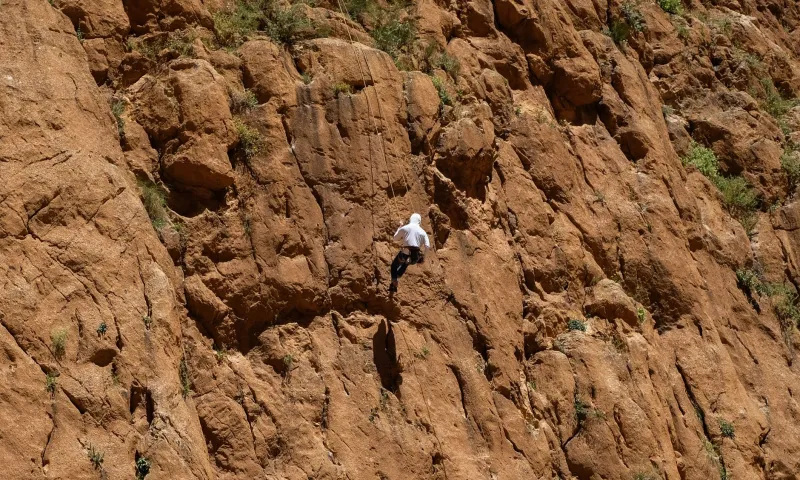
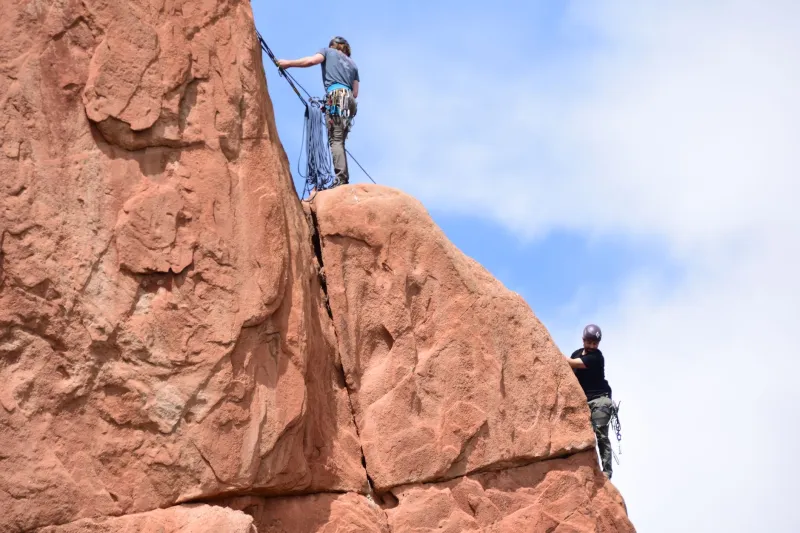
Your Gym Grade Is a Lie Your Ego Tells Itself — Here's What Outdoor Rock Actually Demands
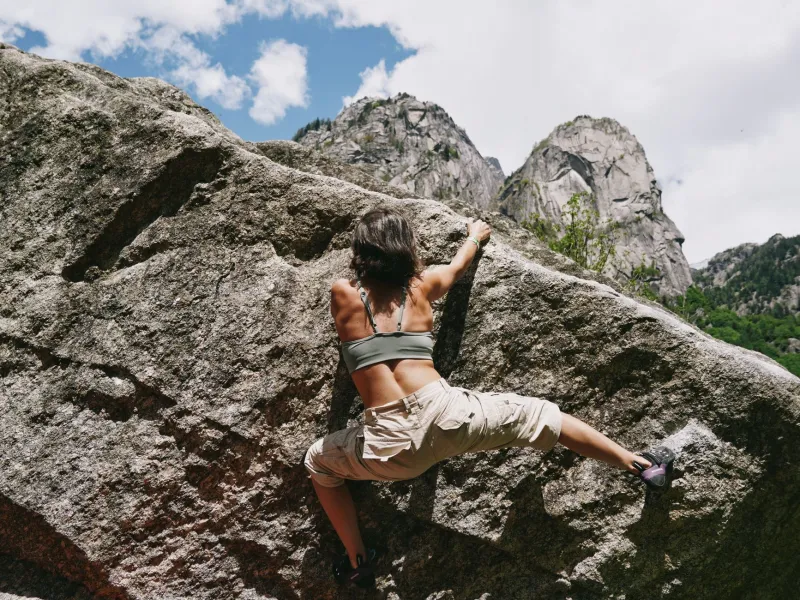
Let's get one thing straight before we go any further: nobody is coming for your gym achievements. Sending your first V5, working a V8 project for three months, finally sticking that dyno — that stuff matters. It builds real strength, real coordination, and real confidence.
But if you've ever driven two hours to a crag, warmed up on what the guidebook calls a V3, and then absolutely cratered on it — pumped, confused, and a little humiliated — you already know the secret the climbing gym never told you: the grade on the wall and the grade on the rock are not the same language.
They're not even the same dialect.
Why Gyms Grade the Way They Do
Gym route setters have a tough job. They're trying to create movement that's engaging, safe, repeatable, and graded consistently across a wall where the holds are color-coded, the surface is uniform, and the angle is known to the degree. They want you to come back. They want you to feel progress. And honestly? They want you to have fun.
That's a great thing. But it creates a specific kind of climber — one who is very good at reading bolt-on holds, trusting rubber on textured fiberglass, and executing movement sequences that someone else designed intentionally. Those are real skills. They're just not the full picture.
Outdoor grades, by contrast, are crowd-sourced consensus built over decades of ascents by people with wildly different body types, shoe technologies, and opinions. A V5 in Red River Gorge and a V5 at Hueco Tanks and a V5 at Bishop's Buttermilks might share a number, but they're asking you for completely different things. And none of them are asking you for what your gym's V5 asked.
What the Rock Is Actually Testing
When you step onto outdoor stone, a few things happen simultaneously that the gym simply cannot replicate.
Hold reading gets way harder. In a gym, holds are shaped to be grabbed. Outdoors, you're looking at a seam, a crystal, a sloper that's been polished by a thousand hands, or a crimp that's only a crimp if you position your fingers exactly right. Nobody painted it orange. Nobody told you it was a foothold. You have to see it, assess it, and commit — often while standing in an awkward position with your calves already burning.
Friction is unpredictable. Gym walls are engineered for consistent rubber contact. Real rock varies by mineral composition, moisture, temperature, time of day, and whether someone put sunscreen on their hands two hours before you. Sandstone climbs differently than granite. Limestone has pockets that feel nothing like a gym jug. Learning to trust — or not trust — your feet on actual rock takes time that no gym session can shortcut.
The mental load multiplies. In a gym, the consequences of falling are mostly known. The pad is there. The bolt is there. The wall is there. Outdoors, your brain is simultaneously managing route-finding, runout assessment, anchor quality, rock quality, weather changes, and the very real possibility that the next hold might be a flake that sounds a little hollow. That cognitive overhead doesn't show up in a V-grade, but it absolutely shows up in your climbing.
Your body position habits get exposed. Gym climbers often develop subtle compensations — relying on body tension over footwork precision, trusting overhanging walls more than slabs, defaulting to pulling hard rather than reading balance. Real rock doesn't care about your compensation patterns. It just stops you cold.
The Grade Gap Is Real — And It's Bigger Than You Think
Here's a rough reality check that most experienced outdoor climbers will back up: plan to drop two to three V-grades when you first transition outdoors, maybe more if you're primarily a gym climber. A solid gym V6 climber might find V4s at their local crag genuinely challenging on their first few visits. That's not failure. That's just the gap being honest with you.
The gap tends to be even wider for climbers who train primarily on steep, overhung gym terrain. Overhangs reward the pulling strength and body tension that gym training builds efficiently. But a lot of outdoor climbing — especially at beginner and intermediate crags across the Southeast and the Mountain West — involves slabs, vertical faces, and technical footwork on small edges. The gym doesn't train that the same way.
So What Actually Measures Outdoor Ability?
Instead of fixating on your V-grade ceiling, try honestly asking yourself these questions:
Can you read a route without beta? Outdoors, there's no color coding. Can you stand at the base of a boulder problem and identify a reasonable sequence without someone showing you the moves first?
How's your footwork on unfamiliar terrain? Not just on overhangs where footwork is forgiving — on vertical and slab terrain where your foot placement is the entire game.
Can you manage fear without shutting down? Outdoor climbing introduces real consequence. Do you have mental tools for staying functional when the runout gets a little spicy or the rock feels less bomber than you'd like?
Do you know how to assess rock quality? Can you tap a hold, listen for hollowness, and make a reasonable call about whether to trust it? This is a learnable skill that gyms simply don't teach.
How do you perform when conditions aren't perfect? Hot granite. Damp limestone. Wind. Approach fatigue. These variables are part of outdoor climbing in a way that doesn't exist when you show up to a climate-controlled gym at 7pm on a Tuesday.
How to Actually Close the Gap
The good news: the gap is closeable, and working through it is some of the most rewarding climbing you'll ever do.
Go outdoors on easier grades than your ego wants. Spend time on V1s and V2s at a new crag. Not because you can't do harder — but because easier terrain lets you focus on the skills the gym didn't build. Route reading. Footwork. Rock texture. Mental management. Build the outdoor foundation before you chase the outdoor numbers.
Climb with people who are better outdoors than you. Not just stronger — more experienced on real rock. Watch how they assess holds. Notice where they put their feet. Ask questions. The outdoor climbing community is generally generous with knowledge if you show up with genuine curiosity.
Keep a simple outdoor log. Grade, crag, what felt hard, what clicked. Over time, patterns emerge. Maybe you're consistently strong on steep terrain but struggling on slabs. Maybe your footwork breaks down when you're tired. Data beats ego every time.
And honestly? Let yourself be a beginner again. The climber who shows up to their first outdoor season with humility and curiosity almost always progresses faster than the one who's defending their gym grade.
The Number Isn't the Point
Outdoor climbing at its best isn't about the V-grade. It's about moving well on real rock, in real conditions, with a real understanding of your own ability and your own limits. The grade is just shorthand — imperfect, inconsistent shorthand — for a conversation between you and the rock.
The rock doesn't care what you send in the gym. But if you show up willing to listen, it'll teach you things no plastic wall ever could.
Climb higher. Go further. Live wild — but maybe start on the V2 first.