It's Not You, It's Your Project: The Uncomfortable Truth About Outgrowing a Climbing Partner
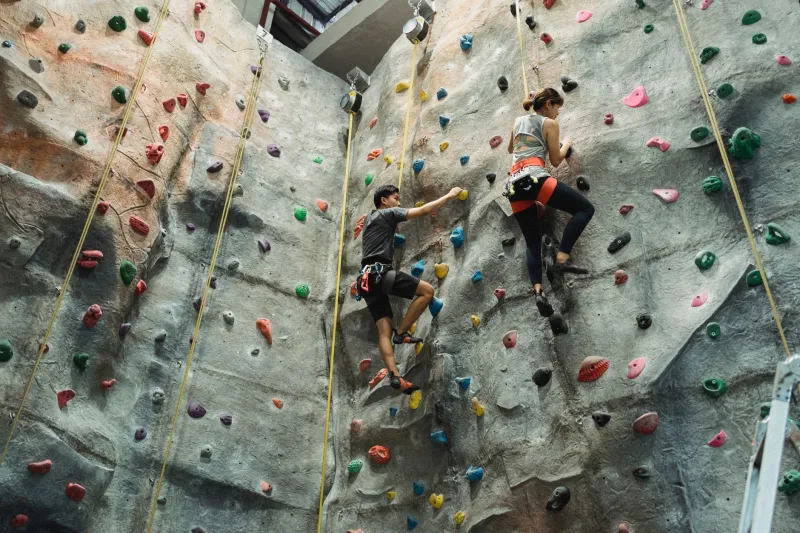
There's a breakup nobody warns you about when you start climbing. It's not the kind that ends with a dramatic fight or a tearful conversation over coffee. It's slower than that — a gradual drift that sneaks up on you over months of gym sessions where you're quietly wishing you were somewhere else, with someone else, projecting something harder.
Outgrowing a climbing partner is genuinely one of the more complicated social dynamics in outdoor sports. And the fact that almost nobody talks about it directly makes it worse.
Why Climbing Partners Hit Different
In most sports, swapping teammates or training partners is pretty low-stakes. You join a different recreational soccer league. You find a new running buddy. People get it.
Climbing doesn't work that way. Your partner holds your rope. They watch you fall, freak out, and occasionally cry at the base of a route you've been projecting for three weeks. That kind of vulnerability builds a specific kind of closeness — one that makes the relationship feel more loaded than a casual sports friendship.
And the gym climbing community is small. Especially in the Southeast, where many of us bounce between the same handful of gyms and crags. Changing partners isn't just a personal decision; it's a community event whether you want it to be or not.
So when you've been climbing with someone for two or three years and you've quietly started to realize your paths are heading in very different directions, that guilt you're feeling? Completely normal. But guilt isn't a reason to keep stalling your progression.
Signs You've Actually Outgrown the Partnership (And Not Just Hit a Bad Stretch)
Bad climbing days happen. Weeks where motivation is low, where your partner's projecting something you're not into, where you'd rather be anywhere else — that's just life. That's not a reason to blow up a partnership.
But there's a difference between a rough patch and a genuine mismatch. Some things worth paying attention to:
Your goals have fundamentally diverged. You're training for your first trad lead at Linville Gorge. They're happy doing laps on the same gym 5.10s they've been climbing for a year. Neither approach is wrong, but they don't belong in the same session.
Every outing feels like a negotiation. You want to push grades. They want to hang out and socialize. You want to try a new crag. They only want to go to the same wall you've been visiting since 2021. When planning a session starts feeling like a hostage negotiation, that's a sign.
You're sandbagging yourself to keep the peace. If you're consistently climbing below your ability or skipping routes you want to try because you don't want to make your partner feel bad, you're already sacrificing your progression. That resentment builds.
The energy is just off. Sometimes there's no clean explanation. The sessions feel flat. You're not psyched. You leave feeling vaguely disappointed. Trust that instinct.
The Conversation Nobody Wants to Have
Here's where most climbers completely freeze up. The idea of telling a friend — someone who's belayed you through your scariest moments — that you want to climb with other people feels almost cruel. So instead, people ghost. They get mysteriously busy. They stop responding to session invites. They let the whole thing quietly die.
That approach is worse. It leaves the other person confused, often hurt, and frequently talking about it to mutual friends. In a small climbing community, that's a mess you don't want.
The better move is a direct, low-drama conversation. A few things that make it easier:
Frame it around your goals, not their shortcomings. There's a massive difference between "I need partners who are climbing at a higher level" and "you're not progressing fast enough." The first is about you. The second is an attack. Lead with your own needs.
Be honest without being brutal. You don't have to itemize every frustration you've accumulated over the past year. Keep it simple. Something like: "I've been trying to push into harder grades and I think I need to find some partners who are projecting at that level. It doesn't change anything about our friendship."
Don't promise things you won't deliver. "We'll still climb together sometimes" is fine if you actually mean it. Don't say it just to soften the blow if you have zero intention of following through. False comfort isn't kind; it just delays the awkward part.
Pick the right moment. Not right after a session where something went sideways. Not over text. A calm, low-stakes moment where you both have time to actually talk.
Navigating the Community Fallout
Even when you handle the conversation well, things can get complicated at the gym or crag. Mutual friends sometimes pick sides. People ask questions. The climbing community's social dynamics can turn a personal decision into a whole thing.
A few ways to keep it from spiraling:
Don't bad-mouth your former partner. Even if the split was messy, keep it off the group chat and out of conversations at the crag. The climbing world is small and has a long memory.
Keep showing up. Don't retreat from shared spaces just because it's temporarily awkward. Disappearing from the gym or skipping trips to avoid someone usually makes things worse in the long run.
Let time do some of the work. Most of the initial weirdness fades faster than you'd expect, especially if both people handle it with some basic maturity.
Actually Finding Someone Better
The upside of navigating all this discomfort is that on the other side of it, there's usually a better climbing partnership waiting. Here's how to find it without just hoping someone falls into your lap:
Be specific about what you're looking for. Not just "someone who climbs hard" but someone whose actual goals and schedule align with yours. Do you want to train for outdoor trad? Comp climbing? Sport routes at a specific crag? Get clear on it.
Use your gym's community boards and social channels. Most gyms post partner-finding resources. SE Climbers' own community threads are a solid starting point. So are local Facebook groups for crags near you.
Go on a few "partner dates" before committing. Try a session or two with someone before you lock into a regular schedule. Climbing compatibility is real — you want to know how someone communicates on the wall, how they handle frustration, and whether their session pace matches yours before you're two hours into a drive to the New River Gorge together.
Don't overlook the value of multiple partners. The best climbers usually don't rely on a single person for everything. One partner for gym training. Another for outdoor sport days. Someone else for longer trad objectives. Spreading it out takes the pressure off any single relationship and keeps things from getting weird when life gets complicated.
The Bigger Picture
Growing as a climber means making hard choices — about training, about risk, about where you spend your time. Partner transitions are part of that. The guilt you feel is real, but it's not a signal to stay stuck. It's just the cost of taking your climbing seriously.
The best partnerships you'll have are probably still ahead of you. Go find them.