You're Wrecking Your Recovery Every Night Without Even Knowing It
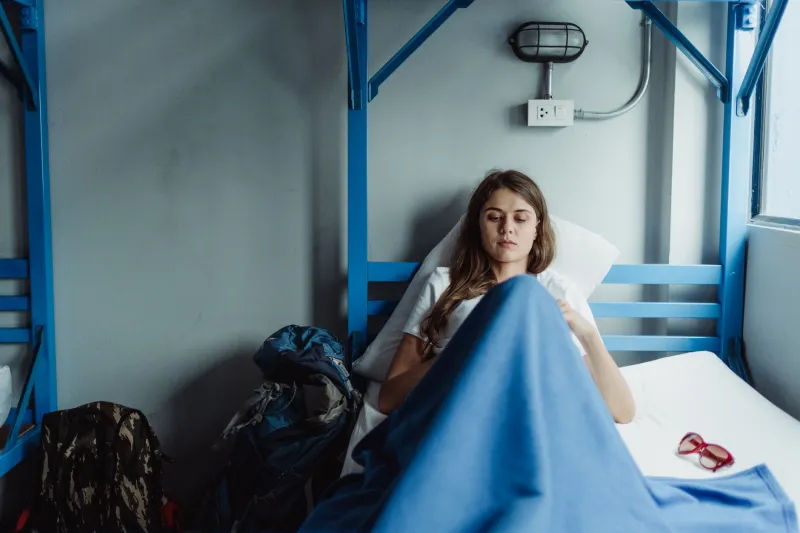
You tracked your macros. You foam rolled after your session. You even took an extra rest day this week. And yet your shoulder still feels off, your fingers are slow to bounce back, and your progress has quietly stalled for longer than you'd like to admit.
Here's a question most climbers never think to ask: what are you doing for the seven or eight hours between when you close your eyes and when your alarm goes off?
Sleep is the single most powerful recovery mechanism your body has. It's when human growth hormone peaks, when soft tissue repairs itself, when your nervous system consolidates motor patterns learned during your last session. But the position you sleep in can either amplify all of that — or slowly undermine it while you're completely unconscious.
This isn't a niche concern. For climbers specifically, sleep posture hits two of the most chronically stressed structures in the sport: the shoulder complex and the finger tendons. Getting this wrong night after night doesn't cause dramatic, obvious injuries. It causes the kind of slow, grinding degradation that makes you feel perpetually half-recovered, always a little behind, never quite firing at full capacity.
Let's dig into what's actually going on.
Why Climbers' Shoulders Are Especially Vulnerable at Night
Climbing is a pulling-dominant sport. That means your anterior shoulder — the front of the joint — takes a beating. The pecs tighten. The internal rotators get overworked. The posterior capsule stiffens up. Over time, without deliberate correction, the shoulder starts to sit forward in the socket, which is exactly the kind of subtle misalignment that turns into impingement, rotator cuff irritation, or worse.
Now imagine sleeping on your side with your arm tucked under your head or folded across your chest. You're loading that already-compromised anterior position for hours at a stretch. The shoulder rolls forward. The rotator cuff muscles sit in a shortened, compressed state. Blood flow to the tendons — which is already limited in connective tissue — gets further restricted.
You wake up with that familiar dull ache. You shake it off and chalk it up to yesterday's session. But it wasn't yesterday's session. It was last night's sleep.
Side sleeping isn't inherently bad, but how you side sleep matters enormously. If you're a committed side sleeper, the fix is simpler than you'd think: hug a pillow. Seriously. Placing a firm pillow in front of your chest and resting your top arm on it keeps the shoulder in a more neutral, slightly externally rotated position. It stops the joint from collapsing forward and gives the posterior capsule room to breathe.
The other side-sleeping mistake climbers make is stacking both shoulders directly on top of each other with no support. This compresses the lower shoulder while the upper one drifts forward. Try sleeping with your knees slightly bent and a pillow between them — it realigns the whole kinetic chain and takes pressure off both the shoulder and the thoracic spine.
What Back Sleeping Gets Right (And Where It Goes Wrong)
Back sleeping is generally the gold standard for musculoskeletal recovery. When you're flat on your back, the spine can decompress, the shoulders drop into a neutral position, and there's no compression on any single joint. For climbers dealing with shoulder issues, it's often the best option.
But here's where climbers blow it: they sleep with their arms raised overhead. Maybe it's a habit. Maybe it just feels comfortable. But sleeping with your arms extended above your head puts the shoulder in a maximally impinged position for hours. The supraspinatus tendon gets pinched. The biceps tendon gets stressed. And your thoracic outlet — the space where nerves and blood vessels pass through your shoulder — gets compressed, which can contribute to that numb, tingly feeling some climbers notice in their fingers in the morning.
Keep your arms at your sides or resting on your stomach when you're on your back. It feels weird for about three nights, then it becomes second nature.
Also worth checking: your pillow height. A pillow that's too thick pushes your head forward and rounds your upper back, which — you guessed it — contributes to that anterior shoulder drift you're already fighting from all the pulling you do at the gym.
The Finger Tendon Angle Nobody Talks About
Finger tendon recovery is where sleep posture gets a little more indirect, but the connection is real. The A2 pulley and the flexor tendons that climbers routinely stress don't exist in isolation. They're part of a chain that runs from your fingertips through your forearm, past your elbow, and into your shoulder and neck.
When you sleep with your wrist bent — either tucked under your pillow or folded at an awkward angle — you're compressing the carpal tunnel and restricting blood flow to the very tendons that need the most repair overnight. Climbers with any history of finger issues should pay particular attention to wrist position during sleep.
A simple intervention: if you're recovering from a finger tweak or just doing heavy training volume, consider wearing a lightweight wrist brace while you sleep. Not a rigid splint — just something that keeps the wrist in a neutral, slightly extended position so the tendons can sit in their least-stressed alignment for the full duration of sleep. Some physical therapists recommend this proactively during high-volume training blocks, not just during injury.
Building a Pre-Sleep Recovery Ritual That Actually Addresses This
Knowing this stuff is one thing. Building a habit around it is another. Here's a simple pre-sleep routine that takes about ten minutes and directly addresses the issues above:
Set up your sleep environment intentionally. Have your pillow at the right height before you get in bed. Put a second pillow where you'll need it — between your knees if you're a side sleeper, under your knees if you're a back sleeper. Make it easy to get into the right position without thinking about it.
Do two minutes of shoulder external rotation stretching. A simple doorway stretch or a sleeper stretch (lying on your side and gently rotating your arm internally until you feel a posterior shoulder stretch) helps reset the joint before you spend eight hours in it. This is especially useful after gym sessions with heavy pulling volume.
Check your wrist position. If you know you're a wrist-bender in your sleep, put the brace on before you close your eyes. Consistency here adds up over weeks and months.
Consider your mattress and pillow quality. This is a bigger investment, but it matters. A mattress that's too soft allows the shoulders to sink and the spine to sag. A pillow that's lost its loft puts your cervical spine in flexion all night. Neither of these are climbing-specific problems, but climbers feel them more acutely because of how much stress the shoulder complex is already under.
The Bigger Picture
Progression in climbing isn't just built in the gym or on the rock. It's built in the margins — the small, unglamorous decisions that compound over time. Sleep is the biggest margin most climbers are leaving on the table, and within sleep, posture is the most ignored variable of all.
You don't need to overhaul your entire life. You just need to sleep smarter. Set up your position intentionally, keep your shoulders in neutral, protect your wrists, and let your body actually do the repair work it's been trying to do all along.
The rock will still be there in the morning. Make sure your body is ready to meet it.