Tendons Don't Lie: How Chasing Hard Grades Too Fast Is Breaking a Generation of Climbers
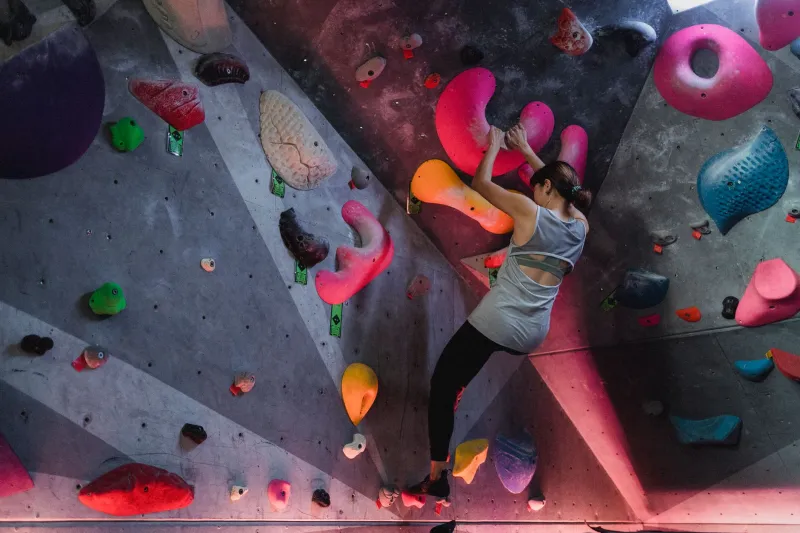
Somewhere between the Instagram reel and the projecting session, something went wrong.
Talk to any sports medicine doctor who works with climbers and you'll hear a version of the same story: patients in their mid-to-late twenties showing up with the kind of tendon damage that used to take decades to accumulate. Pulley injuries. Flexor tendon strains. Chronic inflammation that doesn't respond to rest the way it should. And when you ask these climbers how long they've been at it, the answer is often somewhere between eighteen months and three years.
This isn't a freak coincidence. It's a trend — and understanding it might be the most important thing you do for your climbing career.
The Speed Problem
Climbing has always had a learning curve, but the timeline used to be self-regulating. You'd progress slowly through grades because the information was hard to find, access to good rock was limited, and the community of people pushing hard grades was small enough that you had mentors who'd seen what overtraining looked like firsthand.
None of those guardrails really exist anymore.
Online training programs, YouTube breakdowns of advanced technique, and climbing gyms that give newer athletes access to V8 and V9 problems within their first year have fundamentally compressed the progression timeline. That's exciting in a lot of ways. But the human body — specifically the connective tissue in your fingers — hasn't gotten the memo.
Here's the biological reality: tendons and pulleys adapt to load much more slowly than muscles do. Your forearms can get significantly stronger in a matter of weeks. Your A2 pulley? That's going to take months, maybe longer, to develop the structural resilience to handle the stress you're throwing at it. When training volume and intensity outpace that adaptation window, you're not building strength — you're accumulating damage.
Social Media Didn't Cause This, But It Sure Didn't Help
Let's be honest about what's happening on climbing social media. The content that gets traction is almost always someone sending something hard, something aesthetic, something that makes you think I want to do that. What you don't see is the six months of deliberate base-building that preceded it. You don't see the days off, the easy mileage sessions, the deliberate decision to stay below a threshold.
That selective visibility creates a distorted picture of what healthy progression actually looks like. Newer climbers see a 24-year-old projecting 5.13 and assume that's the pace they should be moving at. What they don't know is that 24-year-old has been climbing since they were twelve.
There's also a more insidious dynamic: the culture of "sending" as identity. When your athletic progress is public-facing and tied to social validation, there's real psychological pressure to keep pushing even when your body is telling you to back off. That twinge in your ring finger becomes something to push through rather than something to pay attention to.
Sports medicine professionals who work with climbing populations have noted a consistent pattern: athletes who delay reporting pain because they're afraid of being told to stop. By the time they show up in a clinic, what started as minor inflammation has become a structural problem.
What the Science Actually Says
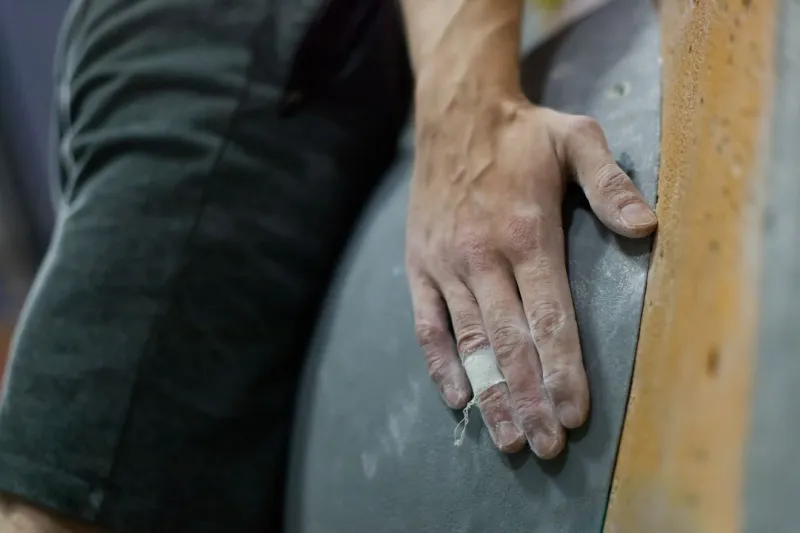
Finger pulley injuries — particularly to the A2 pulley, which sits at the base of your ring finger — are the most common climbing-related injury, accounting for a significant portion of all climbing-related orthopedic complaints. Crimp-heavy training dramatically increases the load on these structures compared to open-hand gripping, which is part of why climbers who train primarily on small holds in gyms are disproportionately represented in injury statistics.
Research on tendon adaptation suggests that connective tissue needs a minimum of 48 to 72 hours to recover from high-intensity loading, and that chronic underrecovery leads to cumulative microdamage that doesn't fully resolve between sessions. Over time, that damage becomes the baseline — and the threshold for a more serious injury drops accordingly.
There's also the issue of training age versus calendar age. A 25-year-old who has been climbing seriously for two years has the connective tissue training age of a two-year climber, regardless of how strong their muscles have gotten. Treating them like an athlete with a decade of base-building is a recipe for a trip to the PT's office.
Recognizing the Warning Signs
The frustrating thing about tendon damage is that it often doesn't announce itself dramatically. You don't blow out a pulley the way you'd pull a muscle. Instead, the warning signs are subtle and easy to rationalize away:
- Persistent soreness in the finger joints that's still there the morning after a session
- A "tweaky" feeling on specific holds or movements that wasn't there before
- Swelling or puffiness around the middle joint of your ring or middle finger
- Pain that gets worse as a session progresses rather than warming up and fading
- A sensation of weakness in your grip that you can't attribute to fatigue
Any one of these showing up consistently is your body flagging a problem. Two or more at the same time means you need to back off and reassess before you turn a manageable issue into a multi-month rehab situation.
A More Sustainable Framework
None of this means you have to train like you're afraid of your own shadow. Ambitious climbing is worth pursuing — it's part of what makes this sport incredible. But ambition and recklessness aren't the same thing, and the climbers who send their hardest stuff in their 30s and 40s are almost always the ones who figured out the difference early.
A few principles that hold up:
Build your base before you build your ceiling. If you've been climbing less than three years, the single best thing you can do for your long-term development is accumulate mileage on moderate terrain. Volume on routes you can do cleanly builds the connective tissue resilience that will let you train harder later without breaking down.
Take your easy days seriously. An easy day isn't a wasted day. It's the session where your tendons catch up to your muscles. If every session is a max effort, you're not training — you're just repeatedly stressing tissue that never fully recovers.
Learn the difference between muscle fatigue and joint discomfort. Forearm pump is normal. A specific ache in a finger joint is not. Getting good at distinguishing these two signals is one of the most valuable skills a climber can develop.
Be skeptical of any training program that doesn't account for your training history. Generic programs designed for advanced athletes are not appropriate starting points for newer climbers, no matter how appealing the promised gains look.
Find a sports medicine provider who actually climbs, or at least treats climbers regularly. General orthopedic advice often misses the nuances of climbing-specific anatomy and loading patterns. A provider who understands the sport will give you much more useful guidance.
The Long Game
Climbing is one of those rare sports where you can genuinely get better well into middle age — if you stay healthy enough to keep doing it. The climbers who make it there aren't the ones who went hardest in their twenties. They're the ones who went smart.
Your tendons are telling you something every single session. The question is whether you're listening.